
La Crosse County Recent Arrests
For La Crosse County recent arrests, the starting point is the county's own La Crosse County Jail Inmate Listing. It shows who sits in the jail now, not every arrest countywide. Sorting by Date Arrested puts fresh bookings on top. Each row lists last, first, and middle name, age, city, state, and arrest date. Some gaps matter: no booking time appears. Release dates, court outcomes, and full archives are left out too. A fast release hides a name. A long stay keeps an old arrest date visible.
There is no separate 24-hour feed or blotter. The county posts only the current roster. Same-day options are covered on the 24 Hour Arrests page. Older bookings and archives fall under the Arrest Log page. The Sheriff also warns that early arrest data can lag behind status changes.
| Window | Best county source | Main limit |
|---|---|---|
| Fresh or same day | Current inmate listing, then jail phone | No published refresh time |
| Several days | Roster dates, police releases, WCCA | No complete county blotter |
| Past custody | Agency records request and court file | Released people leave the live roster |
Arrested Last Night in La Crosse County
Hunting for a name from last night? Start with the official jail roster and sort by Date Arrested. Then compare carefully. Match the full name, middle name, age, city, and state before you assume it is the right person. The city field is context only. The Sheriff does not treat it as where the incident happened. No row for the person? Call the jail at (608) 785-9630 or the Sheriff Business Office at (608) 785-9629. A missing entry can simply mean processing lag. It might be a fast release, a citation, a transfer, juvenile placement, a different spelling, or custody tracked in another system.
Wisconsin VINE offers a second way to check county-jail custody. It includes free alerts for a person you select. It relies on agency data too. A very fresh arrest can lag behind. The VINELink Check page walks through name searches. It also covers multiple matches, phone or email alerts, and the four-digit PIN for telephone notices. Keep one limit in mind. Neither the roster nor VINE will tell you about charges. You will not learn whether they were later filed, changed, dismissed, or resolved.
A name on the list does not always mean a criminal case. Confinement can also involve non-criminal matters, such as civil contempt.
The La Crosse County Jail Roster
The La Crosse County jail roster answers one narrow question. Is this adult in county jail custody right now? Treat it that way. It is not an arrest-history database for the county. The public table carries no photo column and no booking image. That does not mean the Sheriff never takes an intake photograph. It means the roster cannot be promised as a mugshot source. Anyone wanting current custody should open the official current-custody interface run by the county.
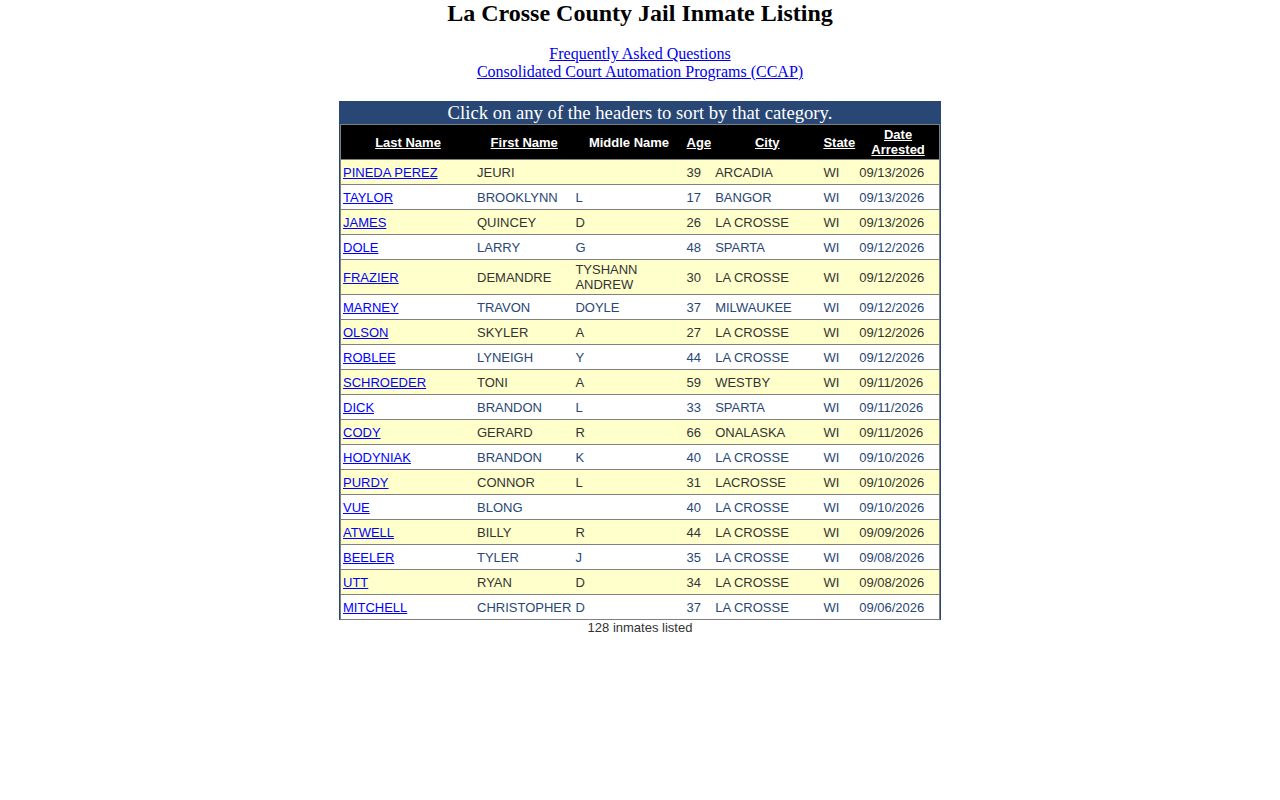
The county's InmateView table lists its fields and who is in custody now. It is not a photo gallery or a fixed daily arrest report.
| Roster field | How to use it |
|---|---|
| Name | Compare all visible name parts, including the middle name. |
| Age | Separate people with similar names. |
| City and state | Use as identity context, not proof of arrest location. |
| Date Arrested | Read as the county's stated arrest date, not a posting timestamp. |
- Open the county listing from the Sheriff inmate page.
- Sort the Date Arrested column and review likely matches.
- Read the county accuracy and innocence notice.
- Call the jail when a new booking has not appeared.
- Request the underlying record from its government custodian.
Where La Crosse County Arrests Are Published
Start any La Crosse County arrest search with official sources. The jail roster lists adults currently in county custody. Wisconsin VINE tracks custody status and sends notifications. For filed circuit-court cases, the tool is Wisconsin Circuit Court Access. It is known as WCCA or CCAP. City police records offices keep incident reports, agency photos, and body-camera footage. The Wisconsin Department Corrections locator only helps once someone has entered state custody or supervision. It does not help at the county booking stage.
| Channel | Official? | Question answered |
|---|---|---|
| County jail roster | Yes | Current adult county-jail custody |
| Wisconsin VINE | Yes | Custody status and alerts |
| WCCA | Yes | Filed case, events, judgment, disposition |
| Police news archive | Yes, but selective | Agency account of selected incidents |
| Arrests.org, Mugshots.com, Wisconsin-Buzz | No | Possible dated lead requiring official verification |
News outlets add context. The La Crosse Tribune, WIZM, and the La Crosse Eagle sometimes follow a case into court. None of them runs a full county roster. Private aggregator sites tend to run stale, incomplete lists with no tie to how a case ended, and an old booking photo on one of them tells you little.
Recent Arrests by City
City lines decide which police records office holds the incident file. They do not guarantee a county-jail booking. La Crosse Recent Arrests fall to La Crosse Police. The department posts selected items in its Police News archive. Its Records Division works through the city open-records portal. Onalaska Recent Arrests can be requested from Onalaska Police via its JustFOIA report-and-media channel. That department offers no routine arrest feed. Holmen Recent Arrests go through the Holmen Police incident and open-records form. Holmen also posts county dispatch contacts and sends fingerprinting questions to La Crosse County Jail. That link between city and county services is handy. It does not mean every Holmen arrest ends in an adult-jail booking. In all three cities, the county roster only shows adults actually booked. The adults must also still be held at La Crosse County Jail.
What a La Crosse County Arrest Record Shows
An arrest report and a booking record come from separate stages. Their custodians differ too. The arresting department writes the incident narrative. It may hold agency photos, body-camera and squad video, citations, and a case number. The jail builds its own intake and custody data at booking. Court staff then maintain the filed case and its outcome. Follow those records in order. Don't trust one roster row to tell the whole story.
| Field or record | What it represents |
|---|---|
| Identity details | The person named in the agency or jail record. |
| Arrest or booking date | Timing stated by the creating agency. |
| Charges as booked | Charges recorded at intake, subject to later change. |
| Bond or bail | A release condition when available, not a disposition. |
| Photograph | An identification image, not evidence of guilt. |
| Court case and disposition | The later filed proceedings and outcome shown by the court. |
- Booking
- The jail intake process after an arrest or other confinement order.
- Bond
- A court-set condition that may permit release while a case proceeds.
- Disposition
- The recorded outcome of a filed court case.
- Expungement
- A court remedy available only when Wisconsin law and the case facts permit it.
La Crosse County Mugshots and Booking Photos
Wisconsin sets its own rules for identification photographs. Statute §165.84 governs law-enforcement identification information and specified photographs. No county has to publish every booking photo online. The La Crosse County jail roster lists bookings without a public photo column. No mugshot is guaranteed there. A requester can ask the Sheriff for a releasable booking photograph, keeping in mind that a city police department may hold a separate incident image. The Wisconsin identification-information statute supplies the legal context for photographs.
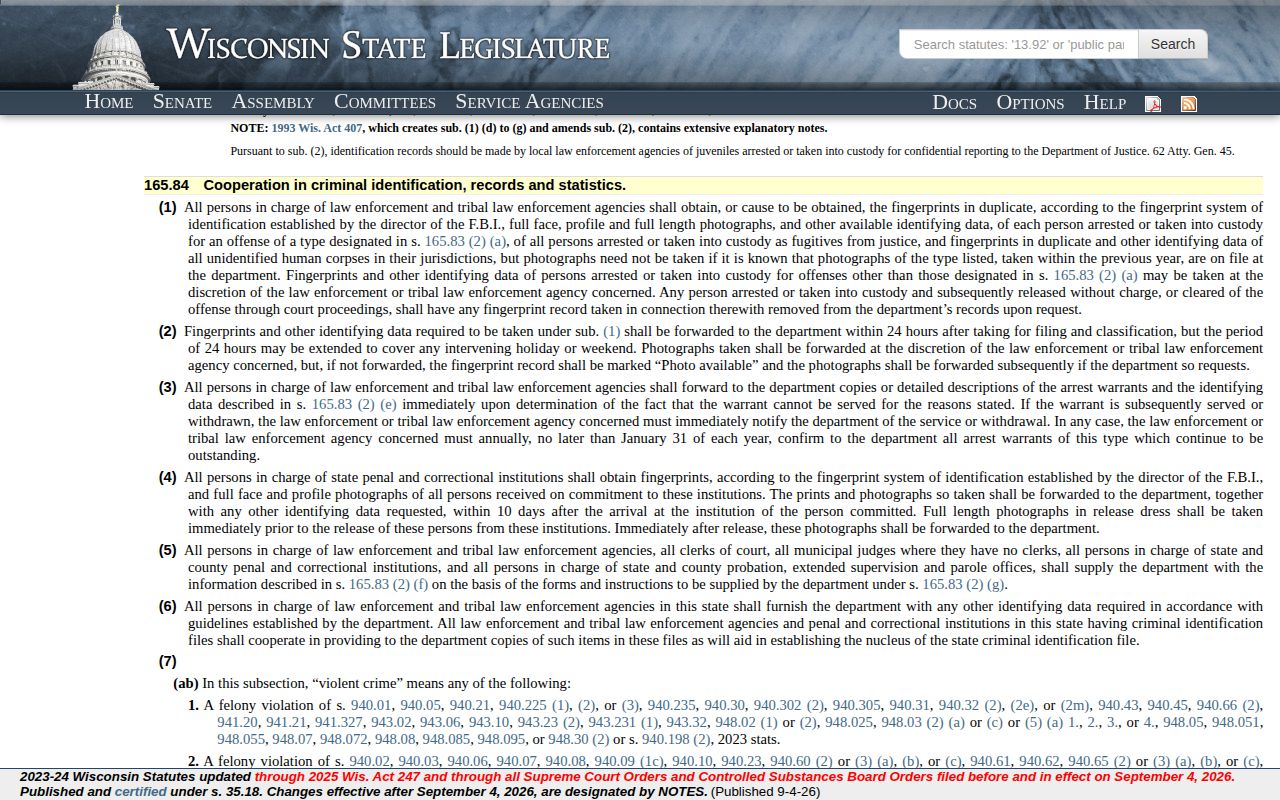
The statute covers identification records only. It does not mandate any mugshot gallery. Private pages at Arrests.org, Mugshots.com, and Wisconsin-Buzz republish La Crosse County entries as secondary copies that can sit dated for years. None of them replaces an official record. Arrests.org offers a no-cost request form, and Mugshots.com describes a no-charge record-maintenance policy for qualifying documentation. These are private processes with no guaranteed result. Correction, court, and Wisconsin DOJ routes stay primary, and nobody should pay an unknown service that promises deletion.
How to Obtain a La Crosse County Arrest Record
The Sheriff's public-records form accepts reports, photographs, body-camera and squad audio or video, and other specified records. Details make the request work. Include the person's name, the approximate arrest or booking date, date of birth if known, the agency, case or incident number, facility, and the exact item wanted, such as one booking photograph. Ask narrowly. Vague requests slow everything down.
- Identify whether the Sheriff, city police, court, or another agency created the record.
- Describe a focused date range and the exact report, photograph, or recording.
- Submit the responsible office's form and retain its confirmation.
- Review any redaction explanation and use the official correction or appeal route when appropriate.
Email delivery is free, the county says. A compact disc costs $10 plus shipping. Payment precedes mailing. The Sheriff aims to provide records within about 10 days when appropriate, though that is local practice rather than a deadline Wisconsin law imposes. Review and lawful redaction can stretch the wait. County communications sets its own copy and transcription fees and keeps 9-1-1 audio and radio transmissions for 120 days. That window never covers jail records or booking photographs.
Arrest Records and Wisconsin Law
Wisconsin presumes records are open. The Public Records Law, Wis. Stat. §19.35 included, lets the public inspect or copy what authorities create and maintain. Exceptions exist. Statutes, case law, privacy interests, and the balancing test can support redaction or withholding of juvenile data, active-investigation material, victim information, and medical details. No response deadline is fixed. Nothing in the law sets a universal week, ten days, or month for agencies to answer.
Expungement works differently. Adult relief under Wis. Stat. §973.015 turns on statutory and sentencing conditions. Time alone grants nothing. Juvenile court expungement has its own scope and does not erase police or DOJ records automatically. Wisconsin DOJ waives its fee for eligible arrest information in a fingerprint-based history when the whole event qualifies, such as release without charge, dismissal, or acquittal backed by documents. None of it touches private copies. A newspaper story or cached result survives these steps, and the official Wisconsin court forms page carries current expungement materials.
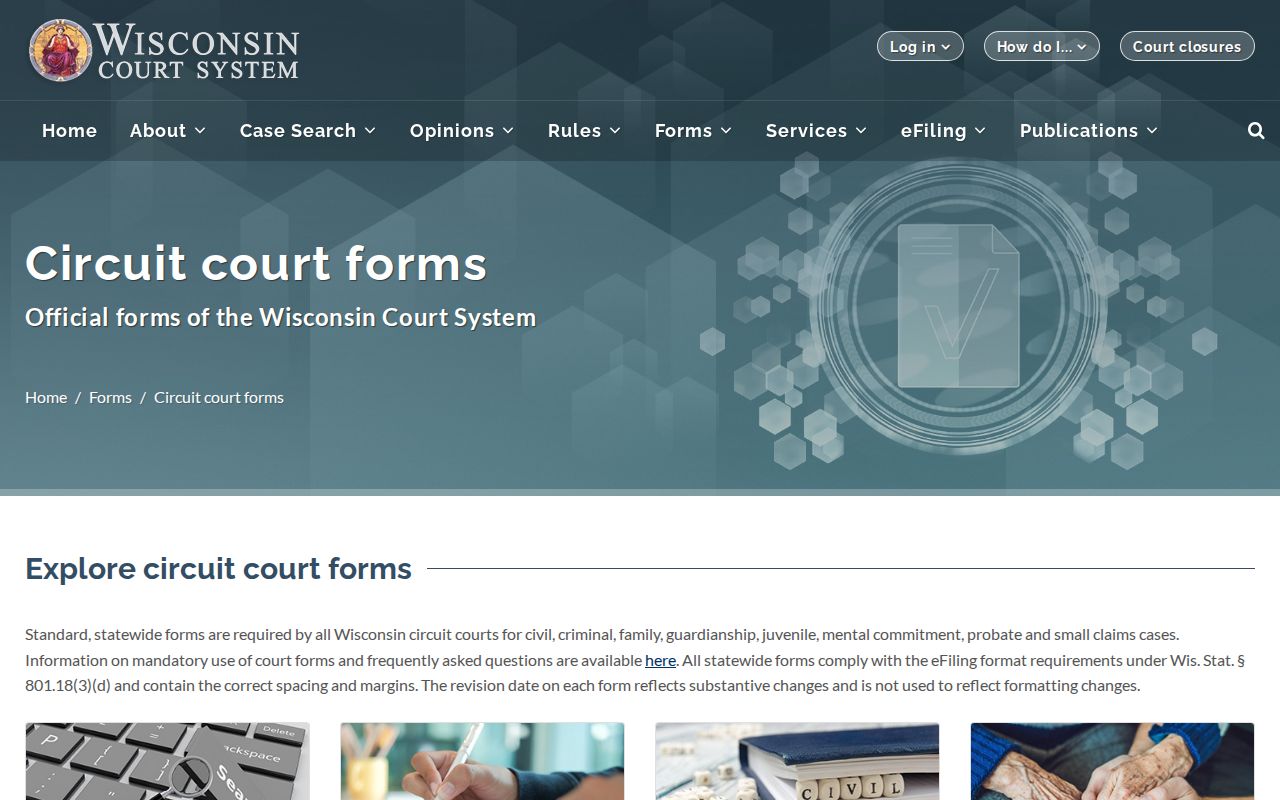
Current court forms and the actual judgment should control instead of a private summary.
Warrants and the La Crosse County Most Wanted List
Warrants have their own county list. The Circuit Court Active Warrant List is separate from the inmate roster. Entries show date received, name, age, city, state, case number, and warrant type. One caution comes with it. The county says the data is current when posted. Removal can lag after a warrant is paid. The county warrant page shows the fields and the warning.
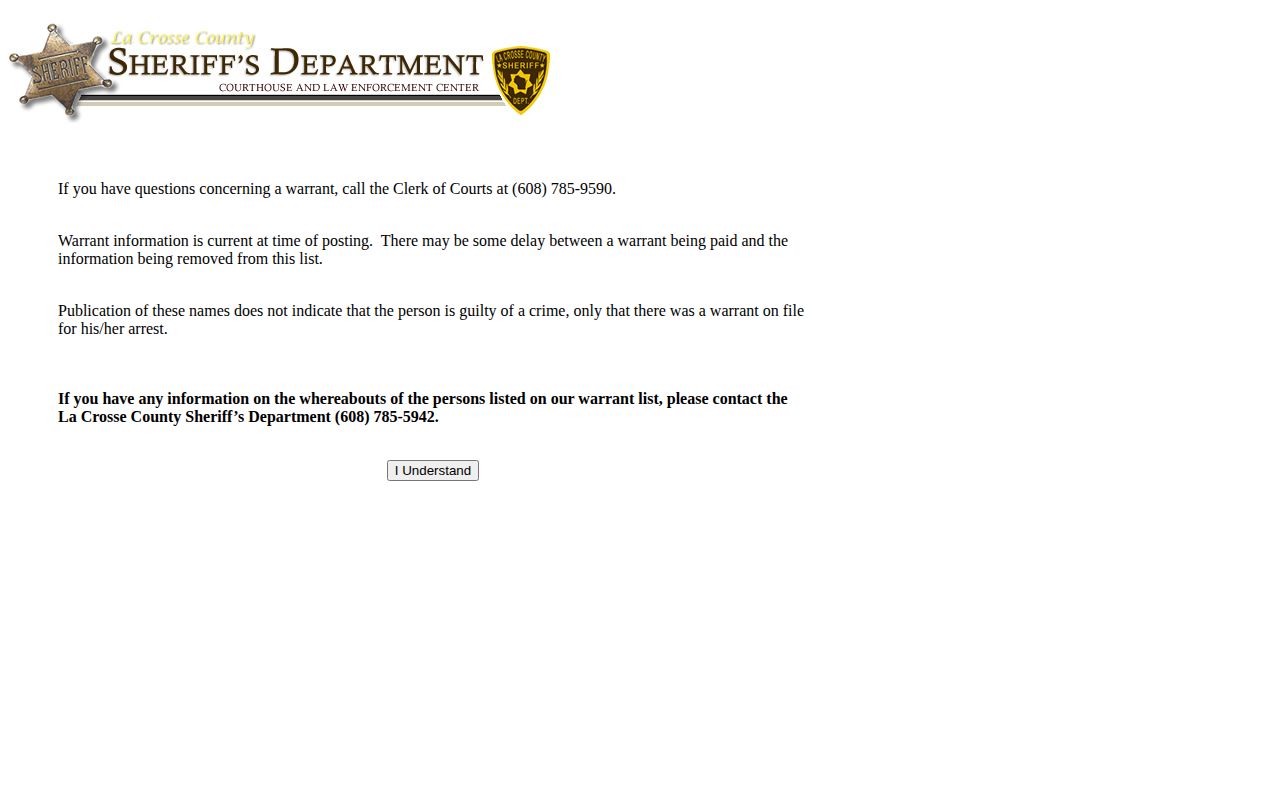
The official list is where a warrant gets verified. For a person's status, the Clerk of Courts or counsel is the right channel. Warrant questions go to the Clerk at (608) 785-9590. Whereabouts tips belong with the Sheriff at (608) 785-5942. Never approach or confront a named person. Call 911 for immediate danger, or use an official non-emergency or tip channel otherwise. The county posts no current most-wanted roster; an older La Crosse Police category is historical and should not pass as current.
After the Arrest: Court Dates and Dispositions
Booking starts a record. It hardly ends the legal story. Bond can move a person off the roster fast. County bond instructions send county matters to the Clerk of Courts at the Law Enforcement Center during business hours, while City of La Crosse municipal bonds follow a separate path. Release erases nothing. Walking out of jail leaves the incident record intact and says nothing about how a charge ends.
Wisconsin Circuit Court Access tracks the filed circuit case, court events, judgments, and disposition. Filing can follow an arrest. Municipal matters may use another court, and juvenile proceedings may be protected. Read the docket. The final disposition answers what an initial charge cannot. Wisconsin DOJ notes that a missing or incorrect criminal-history disposition can be fixed with a judgment, dismissal order, or prosecutor documentation.
Trends live elsewhere. Annual La Crosse Police statistics and county Criminal Justice Management Council analysis show patterns over time far better than a roster that lists only people still confined. Annual arrest totals are not today's booking count.
State Prison and Federal Custody
An arrest in La Crosse County is only the start of the custody trail. Some people move on to state prison or supervision rather than the county jail. For them, the Wisconsin DOC Inmate and Offender Search is the right tool. It tracks people in state custody and on community supervision. A DOC photo is not a county booking photo. Enrolled victims, survivors, and witnesses can also get alerts through DOC NOTIS. The alerts cover prison and supervision changes.
Federal custody uses the Bureau of Prisons inmate locator. Immigration detention runs through the ICE Online Detainee Locator. Neither tool connects to the La Crosse County roster. Juvenile detention is a separate branch. A La Crosse Police release shows an adult arrest and a juvenile placement handled in different systems.
| Custody state | Source |
|---|---|
| Current adult county jail | La Crosse County inmate listing |
| County-jail alerts | Wisconsin VINE |
| State custody or supervision | Wisconsin DOC locator |
| Federal prison | BOP inmate locator |
| Immigration detention | ICE detainee locator |
| Filed circuit case | WCCA |
Why La Crosse Arrests Lag
Delays are built in. A new La Crosse County arrest does not hit the public roster instantly. Officers handle the arrest first. Transport, identity, property, and the report come next. Jail staff complete intake only when the person is accepted for confinement. The Sheriff warns that early arrest data may lag. There is no promised refresh interval for the roster. So a claim like "updates every fifteen minutes" would be unsupported.
Bond shapes what you see too. Someone may get a quick bond hearing and leave custody after meeting the conditions. The county jail services page lists cash, money orders, cashier's checks, major cards, and AllPaid. City of La Crosse municipal bonds follow a distinct route. That gap explains something. A person arrested in La Crosse County can be absent from the roster later on.
When timing matters, note what you checked. Save the roster URL, the date and time, the spelling, and the visible fields. Then call the jail. For a durable account, request the incident or booking record from the custodian. That keeps two claims apart. "Not found on the current list" is not the same as "not arrested."
Can a roster date prove when booking finished? No. The public table shows a Date Arrested field, not a booking-completion or publication timestamp. Ask the custodian for the exact sequence when it matters.
Who Holds La Crosse Arrest Photos
Who took the photo decides where to ask. La Crosse County Jail may hold an intake or identification photo for someone booked there. La Crosse, Onalaska, and Holmen police may hold an incident photo, evidence image, or body-camera frame from their own case. These records are not interchangeable. Say which image you want. Give the agency, the incident date, a case number, and the person's name as precisely as you can.
La Crosse Police takes requests through its open-records portal or its Records Division at (608) 789-7227. A time frame helps with busy video requests. Onalaska Police links to a JustFOIA portal and sits at 415 Main Street, reachable at (608) 781-9550. Holmen Police offers a direct incident and open-records form. It asks for a description, incident date, citation or accident number, and Holmen case number. That office is at 119 Wall Street West, (608) 526-4212.
Every custodian applies Wisconsin law. Redaction rules and the public-records balancing test apply to each request. A denial does not prove the image never existed. It only shows the agency made a release decision. Juvenile information is especially protected. The adult county roster says nothing about whether a juvenile was detained elsewhere.
Where Old Arrest Records Go
Old arrests leave the live list. The county posts no fixed retention period for its roster, booking records, or booking photos. The list simply tracks current incarceration. Old Date Arrested entries stick around because someone is still confined, not because an archive window exists. When a released person drops off, that does not erase police, jail, court, or dispatch records kept on separate schedules. Those files survive.
History takes more digging. For an older La Crosse County arrest, start with WCCA and any filed circuit case. Check the arresting agency's news archive next. Then file a focused records request. La Crosse Police News runs on events, not a full booking log. Its older "Arrested" category holds historical material but is not a current source. The La Crosse Tribune Crime and Courts collection, WIZM, and the La Crosse Eagle may carry dated reporting under their own access rules.
Dispatch audio has a firm local deadline. La Crosse County Public Safety Communications keeps 9-1-1 audio and radio traffic for 120 days from creation. Ask fast. Give the time, place, responding agency, channel if known, and incident number. Other government records follow their own schedules and law. Wisconsin's Public Records Board publishes state retention resources, but another agency's schedule should not be imposed on the Sheriff without confirmation.
La Crosse Arrest News and Trends
Trend data exists, but it moves slowly. La Crosse Police releases annual statistics covering arrests and arrest charges. The county's Criminal Justice Management Council adds its own public analysis. Neither tells you who was booked today. Counts may track one agency, one charge type, or a window of time that does not match the jail population. Keep the measure and time frame tied to its source when comparing trends.
Local news fills a different gap. WIZM has named specific La Crosse-area arrests, and in one Holmen case said a suspect was booked into La Crosse County Jail while showing an image described as a county-jail mugshot. So booking context and photos do surface in journalism. But that single story proves no routine WIZM roster. It also cannot confirm every city arrest gets covered. The Tribune and La Crosse Eagle run selected crime and court stories, not complete booking lists.
Reporters usually write near the start of a case. Bond rulings, amended charges, dismissals, sentencing, or corrections may land elsewhere later. Compare the story date with WCCA. Then check the originating agency too. Old pages can linger after a source changes. Ask the publisher for a correction and save the exact URL. Search engines generally remove outdated content only after the original page is gone or materially changed.
Not Every Jail Entry Is Criminal
The Sheriff's inmate notice makes one point plainly: jail time does not always follow a criminal case. A person can be held before trial. Confinement can also stem from an unpaid forfeiture, civil contempt, or another lawful authority. On a recent-arrests page, the everyday word "arrest" can make a jail list sound narrower than it really is.
Custody language deserves exact use. "Booked" means the jail recorded an intake. "In custody" means present confinement, and "released" means that custody ended or changed, not that the case vanished. "Sentenced" and "under supervision" point to later stages. A detainer is a hold request that can affect custody even when the local case is not the only reason someone sits in jail.
These distinctions also show why systems disagree without any of them being broken. The jail roster answers present county custody. VINE sends notifications from participating custodians, while WCCA carries public circuit-court information. DOC handles state custody and supervision. BOP and ICE cover federal systems. A records request pulls one agency's file. State exactly what each official source shows, and resist filling gaps with guesses.
La Crosse Jail Record Context
La Crosse County keeps an official jail history. It runs from the first county jail in 1858 to the Fourth Street jail opened in 1965, later juvenile and Huber facilities, and the Law Enforcement Center jail that opened in 1997. Records were created under different facilities and systems along the way. That history supplies local context. It says nothing about current capacity, daily operations, or online retention.
Today's public path runs through the Sheriff. It includes the inmate page, the current inmate listing, jail contacts, the records form, and the county warrant application. The Sheriff's office lists no booking app or social feed working as a full daily roster. Third-party mobile products do repackage jail data. Their branding never makes them county-operated. Stick with the official web application and agency contacts for answers that count.
For one specific jail record, call the Sheriff's Business Office at 333 Vine Street, Room 1500, La Crosse, Wisconsin 54601, phone (608) 785-9629. The jail line is (608) 785-9630. County dispatch sits at (608) 782-7575. Each contact serves a different need. Dial 911 only for emergencies. Request copies through the records process and bring fresh custody questions to the jail. Court and warrant issues belong with the Clerk or counsel.